 română
 engleză
 Meteo Romania
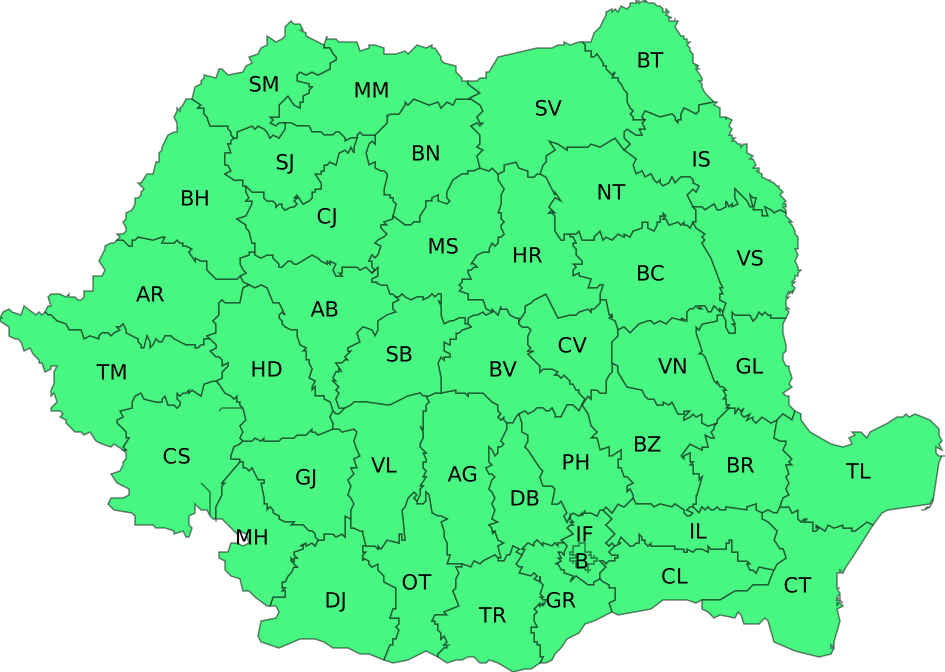
Temperatură: 22.7 ºC
Vânt: 3.5 m/s, directia : S
Nebulozitate: indisponibil
Presiune: 1000.2 mb, variabila
Umezeală relativă: 56%


alege stația meteo
Situația meteo România: 18-06-2025 ora 22:00
ADAMCLISI
18-06-2025 ora 22:00
ADJUD
18-06-2025 ora 22:00Temperatură: 21.8 ºC
Vânt: 1.0 m/s, directia : VNV
Nebulozitate: indisponibil
Presiune: 1005.6 mb, variabila
Umezeală relativă: 77%ALBA IULIA
18-06-2025 ora 22:00Temperatură: 25.6 ºC
Vânt: 1.0 m/s, directia : SSE
Nebulozitate: indisponibil
Presiune: 990.4 mb, in crestere
Umezeală relativă: 43%ALEXANDRIA
18-06-2025 ora 22:00 Temperatură: 24.0 ºC
Vânt: 3.2 m/s, directia : ESE
Nebulozitate: cer senin
Presiune: 1009.3 mb, in crestere
Umezeală relativă: 65%AMZACEA
18-06-2025 ora 22:00Temperatură: 18.8 ºC
Vânt: 2.1 m/s, directia : S
Nebulozitate: indisponibil
Presiune: 1008.6 mb, in crestere
Umezeală relativă: 72%ARAD
18-06-2025 ora 22:00 Temperatură: 26.0 ºC
Vânt: 0.9 m/s, directia : V
Nebulozitate: cer partial noros
Presiune: 1005.5 mb, stationara
Umezeală relativă: 45%BACAU
18-06-2025 ora 22:00Temperatură: 20.2 ºC
Vânt: 0.5 m/s, directia : V
Nebulozitate: cer senin
Presiune: 997.7 mb, variabila
Umezeală relativă: 76%BACLES
18-06-2025 ora 22:00Temperatură: 25.2 ºC
Vânt: 3.0 m/s, directia : NV
Nebulozitate: indisponibil
Presiune: 982.7 mb, in crestere
Umezeală relativă: 51%BAIA MARE
18-06-2025 ora 22:00 Temperatură: 21.9 ºC
Vânt: 3.1 m/s, directia : NNE
Nebulozitate: cer acoperit
Presiune: 997.4 mb, variabila
Umezeală relativă: 55%BAILE HERCULANE
18-06-2025 ora 22:00Temperatură: 23.0 ºC
Vânt: 1.3 m/s, directia : NNE
Nebulozitate: cer partial noros
Presiune: 996.5 mb, in crestere
Umezeală relativă: 61%BAILESTI
18-06-2025 ora 22:00Temperatură: 25.4 ºC
Vânt: 1.7 m/s, directia : V
Nebulozitate: cer partial noros
Presiune: 1011.2 mb, variabila
Umezeală relativă: 53%BAISOARA
18-06-2025 ora 22:00Temperatură: 14.8 ºC
Vânt: 1.3 m/s, directia : NV
Nebulozitate: indisponibil
Presiune: 871.9 mb, variabila
Umezeală relativă: 59%BALEA LAC
18-06-2025 ora 22:00Temperatură: 10.6 ºC
Vânt: 3.4 m/s, directia : N
Nebulozitate: cer partial noros
Presiune: 801.9 mb, stationara
Umezeală relativă: 95%
Strat zăpadă : discontinuuBANLOC
18-06-2025 ora 22:00Temperatură: 24.8 ºC
Vânt: 1.7 m/s, directia : VNV
Nebulozitate: indisponibil
Presiune: 1009.9 mb, in crestere
Umezeală relativă: 55%BARAOLT
18-06-2025 ora 22:00Temperatură: 19.6 ºC
Vânt: 1.8 m/s, directia : N
Nebulozitate: indisponibil
Presiune: 960.6 mb, variabila
Umezeală relativă: 68%BARLAD
18-06-2025 ora 22:00Temperatură: 22.1 ºC
Vânt: 1.7 m/s, directia : NNE
Nebulozitate: indisponibil
Presiune: 998.3 mb, in crestere
Umezeală relativă: 51%BARNOVA (RADAR)
18-06-2025 ora 22:00Temperatură: 19.3 ºC
Vânt: 0.5 m/s, directia : SSV
Nebulozitate: cer senin
Presiune: 973.4 mb, in scadere
Umezeală relativă: 60%BATOS
18-06-2025 ora 22:00Temperatură: 21.1 ºC
Vânt: 2.4 m/s, directia : NV
Nebulozitate: indisponibil
Presiune: 967.8 mb, variabila
Umezeală relativă: 52%BECHET
18-06-2025 ora 22:00Temperatură: 24.2 ºC
Vânt: 0.2 m/s, directia : SV
Nebulozitate: cer senin
Presiune: 1013.8 mb, in crestere
Umezeală relativă: 69%BISOCA
18-06-2025 ora 22:00Temperatură: 19.1 ºC
Vânt: 2.5 m/s, directia : S
Nebulozitate: indisponibil
Presiune: 923.0 mb, stationara
Umezeală relativă: 75%BISTRITA
18-06-2025 ora 22:00Temperatură: 22.3 ºC
Vânt: 1.4 m/s, directia : VNV
Nebulozitate: cer senin
Presiune: 976.2 mb, variabila
Umezeală relativă: 47%BLAJ
18-06-2025 ora 22:00Temperatură: 23.6 ºC
Vânt: 2.1 m/s, directia : N
Nebulozitate: indisponibil
Presiune: 980.1 mb, in crestere
Umezeală relativă: 40%BOITA
18-06-2025 ora 22:00Temperatură: 21.5 ºC
Vânt: 0.8 m/s, directia : VSV
Nebulozitate: indisponibil
Presiune: 959.9 mb, in crestere
Umezeală relativă: 65%BOROD
18-06-2025 ora 22:00Temperatură: 20.6 ºC
Vânt: 1.7 m/s, directia : ESE
Nebulozitate: indisponibil
Presiune: 981.1 mb, variabila
Umezeală relativă: 62%BOTOSANI
18-06-2025 ora 22:00Temperatură: 20.5 ºC
Vânt: 1.1 m/s, directia : VNV
Nebulozitate: cer partial noros
Presiune: 998.9 mb, variabila
Umezeală relativă: 65%BOZOVICI
18-06-2025 ora 22:00Temperatură: 21.9 ºC
Vânt: 0.3 m/s, directia : ENE
Nebulozitate: cer senin
Presiune: 990.7 mb, variabila
Umezeală relativă: 71%BRAILA
18-06-2025 ora 22:00Temperatură: 22.1 ºC
Vânt: 0.4 m/s, directia : V
Nebulozitate: cer senin
Presiune: 1016.1 mb, stationara
Umezeală relativă: 68%BRASOV GHIMBAV
18-06-2025 ora 22:00Temperatură: 18.7 ºC
Vânt: 2.9 m/s, directia : SV
Nebulozitate: cer partial noros
Presiune: 957.7 mb, variabila
Umezeală relativă: 83%BUCIN
18-06-2025 ora 22:00Temperatură: 14.8 ºC
Vânt: 2.7 m/s, directia : VSV
Nebulozitate: cer partial noros
Presiune: 876.9 mb, stationara
Umezeală relativă: 60%BUCURESTI AFUMATI
18-06-2025 ora 22:00Temperatură: 23.5 ºC
Vânt: 0.4 m/s, directia : SE
Nebulozitate: cer senin
Presiune: 1008.5 mb, variabila
Umezeală relativă: 62%BUCURESTI BANEASA
18-06-2025 ora 22:00Temperatură: 20.0 ºC
Vânt: 0.3 m/s, directia : NV
Nebulozitate: cer senin
Presiune: 1007.4 mb, variabila
Umezeală relativă: 87%BUCURESTI FILARET
18-06-2025 ora 22:00Temperatură: 23.8 ºC
Vânt: 0.4 m/s, directia : S
Nebulozitate: cer senin
Presiune: 1008.3 mb, variabila
Umezeală relativă: 63%BUZAU
18-06-2025 ora 22:00Temperatură: 23.1 ºC
Vânt: 2.4 m/s, directia : SSV
Nebulozitate: cer senin
Presiune: 1006.8 mb, stationara
Umezeală relativă: 65%CALAFAT
18-06-2025 ora 22:00Temperatură: 28.4 ºC
Vânt: 1.6 m/s, directia : VNV
Nebulozitate: cer senin
Presiune: 1011.2 mb, in crestere
Umezeală relativă: 46%CALARASI
18-06-2025 ora 22:00Temperatură: 25.1 ºC
Vânt: 0.9 m/s, directia : SSE
Nebulozitate: indisponibil
Presiune: 1015.7 mb, stationara
Umezeală relativă: 52%CALIMANI (RETITIS)
18-06-2025 ora 22:00Temperatură: 10.7 ºC
Vânt: 6.3 m/s, directia : VSV
Nebulozitate: cer senin
Presiune: 804.4 mb, in scadere
Umezeală relativă: 63%CAMPENI (BISTRA)
18-06-2025 ora 22:00Temperatură: 18.8 ºC
Vânt: 0.1 m/s, directia : N
Nebulozitate: cer partial noros
Presiune: 950.1 mb, variabila
Umezeală relativă: 59%CAMPINA
18-06-2025 ora 22:00Temperatură: 19.8 ºC
Vânt: 0.6 m/s, directia : NV
Nebulozitate: indisponibil
Presiune: 965.8 mb, variabila
Umezeală relativă: 82%CAMPULUNG MUSCEL
18-06-2025 ora 22:00Temperatură: 19.6 ºC
Vânt: 0.5 m/s, directia : NNV
Nebulozitate: indisponibil
Presiune: 942.0 mb, variabila
Umezeală relativă: 82%CARACAL
18-06-2025 ora 22:00Temperatură: 25.7 ºC
Vânt: 0.4 m/s, directia : NNE
Nebulozitate: cer senin
Presiune: 1005.8 mb, variabila
Umezeală relativă: 52%CARANSEBES
18-06-2025 ora 22:00Temperatură: 22.8 ºC
Vânt: 1.6 m/s, directia : ESE
Nebulozitate: cer senin
Presiune: 992.0 mb, in crestere
Umezeală relativă: 68%CEAHLAU TOACA
18-06-2025 ora 22:00Temperatură: 11.4 ºC
Vânt: 7.5 m/s, directia : V
Nebulozitate: cer partial noros
Presiune: 815.8 mb, in scadere
Umezeală relativă: 73%CERNAVODA
18-06-2025 ora 22:00Temperatură: 23.3 ºC
Vânt: 1.5 m/s, directia : ESE
Nebulozitate: indisponibil
Presiune: 1007.9 mb, variabila
Umezeală relativă: 58%CHISINEU CRIS
18-06-2025 ora 22:00Temperatură: 24.1 ºC
Vânt: 1.0 m/s, directia : NV
Nebulozitate: cer acoperit
Presiune: 1007.9 mb, stationara
Umezeală relativă: 53%CLUJ-NAPOCA
18-06-2025 ora 22:00Temperatură: 23.0 ºC
Vânt: 1.5 m/s, directia : V
Nebulozitate: cer partial noros
Presiune: 972.2 mb, variabila
Umezeală relativă: 40%CONSTANTA
18-06-2025 ora 22:00Temperatură: 23.5 ºC
Vânt: 1.0 m/s, directia : S
Nebulozitate: cer senin
Presiune: 1016.9 mb, variabila
Umezeală relativă: 50%CONSTANTA - dig
18-06-2025 ora 22:00Temperatură: 24.0 ºC
Vânt: 3.6 m/s, directia : SSE
Nebulozitate: indisponibil
Presiune: 1018.1 mb, variabila
Umezeală relativă: 49%CORUGEA
18-06-2025 ora 22:00Temperatură: 22.1 ºC
Vânt: 1.6 m/s, directia : NV
Nebulozitate: indisponibil
Presiune: 992.8 mb, stationara
Umezeală relativă: 59%COTNARI
18-06-2025 ora 22:00Temperatură: 22.8 ºC
Vânt: 1.0 m/s, directia : S
Nebulozitate: indisponibil
Presiune: 984.2 mb, stationara
Umezeală relativă: 50%CRAIOVA
18-06-2025 ora 22:00Temperatură: 27.2 ºC
Vânt: 1.3 m/s, directia : NNE
Nebulozitate: cer senin
Presiune: 995.8 mb, in crestere
Umezeală relativă: 48%CUNTU
18-06-2025 ora 22:00Temperatură: 14.9 ºC
Vânt: 4.9 m/s, directia : NE
Nebulozitate: cer senin
Presiune: 861.4 mb, in crestere
Umezeală relativă: 74%CURTEA DE ARGES
18-06-2025 ora 22:00Temperatură: 21.4 ºC
Vânt: 1.5 m/s, directia : NNV
Nebulozitate: indisponibil
Presiune: 967.0 mb, variabila
Umezeală relativă: 77%DARABANI
18-06-2025 ora 22:00Temperatură: 23.4 ºC
Vânt: 1.3 m/s, directia : V
Nebulozitate: cer senin
Presiune: 987.3 mb, stationara
Umezeală relativă: 47%DEDULESTI-MORARESTI
18-06-2025 ora 22:00 Fenomen : aer cetos
Temperatură: 19.6 ºC
Vânt: 1.5 m/s, directia : V
Nebulozitate: indisponibil
Presiune: 956.3 mb, variabila
Umezeală relativă: 84%DEJ
18-06-2025 ora 22:00Temperatură: 21.8 ºC
Vânt: 1.0 m/s, directia : VNV
Nebulozitate: indisponibil
Presiune: 991.4 mb, variabila
Umezeală relativă: 48%DEVA
18-06-2025 ora 22:00Temperatură: 22.9 ºC
Vânt: 1.7 m/s, directia : VSV
Nebulozitate: cer senin
Presiune: 991.7 mb, in crestere
Umezeală relativă: 55%DRAGASANI
18-06-2025 ora 22:00Temperatură: 26.1 ºC
Vânt: 1.0 m/s, directia : SSV
Nebulozitate: indisponibil
Presiune: 986.3 mb, stationara
Umezeală relativă: 50%DROBETA TURNU SEVERIN
18-06-2025 ora 22:00Temperatură: 27.4 ºC
Vânt: 3.3 m/s, directia : VNV
Nebulozitate: cer senin
Presiune: 1009.6 mb, in crestere
Umezeală relativă: 45%DUMBRAVENI
18-06-2025 ora 22:00Temperatură: 18.8 ºC
Vânt: 0.7 m/s, directia : N
Nebulozitate: indisponibil
Presiune: 981.6 mb, variabila
Umezeală relativă: 74%DUMBRAVITA DE CODRU
18-06-2025 ora 22:00Temperatură: 21.5 ºC
Vânt: 1.2 m/s, directia : V
Nebulozitate: cer senin
Presiune: 953.1 mb, stationara
Umezeală relativă: 49%FAGARAS
18-06-2025 ora 22:00Temperatură: 20.8 ºC
Vânt: 1.4 m/s, directia : VNV
Nebulozitate: indisponibil
Presiune: 969.6 mb, variabila
Umezeală relativă: 83%FETESTI
18-06-2025 ora 22:00Temperatură: 24.4 ºC
Vânt: 1.1 m/s, directia : ENE
Nebulozitate: indisponibil
Presiune: 1011.4 mb, variabila
Umezeală relativă: 57%FOCSANI
18-06-2025 ora 22:00Temperatură: 23.9 ºC
Vânt: 1.0 m/s, directia : SSE
Nebulozitate: cer senin
Presiune: 1011.6 mb, stationara
Umezeală relativă: 65%FUNDATA
18-06-2025 ora 22:00Temperatură: 15.2 ºC
Vânt: 1.6 m/s, directia : ENE
Nebulozitate: cer senin
Presiune: 869.6 mb, stationara
Umezeală relativă: 84%GALATI
18-06-2025 ora 22:00Temperatură: 24.6 ºC
Vânt: 0.8 m/s, directia : N
Nebulozitate: cer senin
Presiune: 1009.7 mb, in crestere
Umezeală relativă: 43%GIURGIU
18-06-2025 ora 22:00Temperatură: 24.5 ºC
Vânt: 0.2 m/s, directia : NNE
Nebulozitate: cer senin
Presiune: 1015.1 mb, in crestere
Umezeală relativă: 65%GORGOVA
18-06-2025 ora 22:00Temperatură: 19.8 ºC
Vânt: 0.2 m/s, directia : NNE
Nebulozitate: indisponibil
Presiune: 1017.3 mb, variabila
Umezeală relativă: 82%GRIVITA
18-06-2025 ora 22:00Temperatură: 21.9 ºC
Vânt: 1.2 m/s, directia : VNV
Nebulozitate: cer senin
Presiune: 1012.8 mb, variabila
Umezeală relativă: 77%GURA PORTITEI
18-06-2025 ora 22:00Temperatură: 23.1 ºC
Vânt: 6.7 m/s, directia : SSV
Nebulozitate: cer senin
Presiune: 1017.9 mb, variabila
Umezeală relativă: 69%GURAHONT
18-06-2025 ora 22:00Temperatură: 23.1 ºC
Vânt: 1.6 m/s, directia : ESE
Nebulozitate: cer partial noros
Presiune: 998.7 mb, variabila
Umezeală relativă: 60%HARSOVA
18-06-2025 ora 22:00Temperatură: 22.4 ºC
Vânt: 2.1 m/s, directia : ENE
Nebulozitate: indisponibil
Presiune: 1013.5 mb, variabila
Umezeală relativă: 59%HOLOD
18-06-2025 ora 22:00Temperatură: 24.1 ºC
Vânt: 1.6 m/s, directia : N
Nebulozitate: cer partial noros
Presiune: 1000.2 mb, variabila
Umezeală relativă: 51%HOREZU 1550
18-06-2025 ora 22:00Temperatură: 14.5 ºC
Vânt: 2.6 m/s, directia : N
Nebulozitate: indisponibil
Presiune: 851.3 mb, variabila
Umezeală relativă: 83%HUEDIN
18-06-2025 ora 22:00Temperatură: 20.6 ºC
Vânt: 1.6 m/s, directia : SV
Nebulozitate: indisponibil
Presiune: 955.8 mb, variabila
Umezeală relativă: 55%IASI
18-06-2025 ora 22:00Temperatură: 19.1 ºC
Vânt: 0.5 m/s, directia : VNV
Nebulozitate: cer senin
Presiune: 1009.2 mb, variabila
Umezeală relativă: 70%IEZER
18-06-2025 ora 22:00Temperatură: 10.4 ºC
Vânt: 0.9 m/s, directia : SV
Nebulozitate: cer partial noros
Presiune: 827.6 mb, stationara
Umezeală relativă: 98%
Strat zăpadă : discontinuuINTORSURA BUZAULUI
18-06-2025 ora 22:00Temperatură: 17.6 ºC
Vânt: 0.7 m/s, directia : S
Nebulozitate: indisponibil
Presiune: 940.5 mb, variabila
Umezeală relativă: 79%JIMBOLIA
18-06-2025 ora 22:00Temperatură: 24.1 ºC
Vânt: 0.9 m/s, directia : V
Nebulozitate: indisponibil
Presiune: 1010.0 mb, stationara
Umezeală relativă: 54%JOSENI
18-06-2025 ora 22:00Temperatură: 17.7 ºC
Vânt: 2.7 m/s, directia : NV
Nebulozitate: cer senin
Presiune: 934.0 mb, in crestere
Umezeală relativă: 61%JURILOVCA
18-06-2025 ora 22:00Temperatură: 22.5 ºC
Vânt: 2.0 m/s, directia : SSV
Nebulozitate: indisponibil
Presiune: 1013.6 mb, variabila
Umezeală relativă: 59%LACAUTI
18-06-2025 ora 21:00Temperatură: 12.9 ºC
Vânt: 6.8 m/s, directia : V
Nebulozitate: cer partial noros
Presiune: 828.0 mb, in scadere
Umezeală relativă: 84%LUGOJ
18-06-2025 ora 22:00Temperatură: 24.4 ºC
Vânt: 1.6 m/s, directia : ENE
Nebulozitate: indisponibil
Presiune: 1005.0 mb, in crestere
Umezeală relativă: 52%MAHMUDIA
18-06-2025 ora 22:00Temperatură: 23.1 ºC
Vânt: 2.1 m/s, directia : SV
Nebulozitate: indisponibil
Presiune: 998.4 mb, variabila
Umezeală relativă: 60%MANGALIA
18-06-2025 ora 22:00Temperatură: 22.5 ºC
Vânt: 0.8 m/s, directia : SE
Nebulozitate: indisponibil
Presiune: 1017.7 mb, stationara
Umezeală relativă: 58%MEDGIDIA
18-06-2025 ora 22:00Temperatură: 22.6 ºC
Vânt: 3.5 m/s, directia : S
Nebulozitate: cer senin
Presiune: 1010.2 mb, variabila
Umezeală relativă: 57%MIERCUREA CIUC
18-06-2025 ora 22:00Temperatură: 18.8 ºC
Vânt: 2.7 m/s, directia : NV
Nebulozitate: cer senin
Presiune: 942.9 mb, variabila
Umezeală relativă: 52%MOLDOVA VECHE
18-06-2025 ora 22:00Temperatură: 24.4 ºC
Vânt: 0.7 m/s, directia : ENE
Nebulozitate: cer partial noros
Presiune: 1009.8 mb, variabila
Umezeală relativă: 53%NEGRESTI (VASLUI)
18-06-2025 ora 22:00Temperatură: 18.0 ºC
Vânt: 1.0 m/s, directia : NNE
Nebulozitate: indisponibil
Presiune: 1002.2 mb, variabila
Umezeală relativă: 79%OBARSIA LOTRULUI
18-06-2025 ora 22:00Temperatură: 14.0 ºC
Vânt: 0.3 m/s, directia : NNE
Nebulozitate: indisponibil
Presiune: 873.0 mb, variabila
Umezeală relativă: 84%OCNA SUGATAG
18-06-2025 ora 22:00Temperatură: 19.5 ºC
Vânt: 1.3 m/s, directia : SSV
Nebulozitate: cer partial noros
Presiune: 961.8 mb, in crestere
Umezeală relativă: 54%ODORHEIUL SECUIESC
18-06-2025 ora 22:00Temperatură: 20.1 ºC
Vânt: 1.1 m/s, directia : N
Nebulozitate: indisponibil
Presiune: 958.9 mb, stationara
Umezeală relativă: 59%OLTENITA
18-06-2025 ora 22:00Temperatură: 23.4 ºC
Vânt: 0.7 m/s, directia : NV
Nebulozitate: indisponibil
Presiune: 1016.2 mb, variabila
Umezeală relativă: 74%ORADEA
18-06-2025 ora 22:00Temperatură: 24.3 ºC
Vânt: 0.3 m/s, directia : SV
Nebulozitate: cer partial noros
Presiune: 1003.2 mb, variabila
Umezeală relativă: 46%ORAVITA
18-06-2025 ora 22:00Temperatură: 22.3 ºC
Vânt: 1.3 m/s, directia : NE
Nebulozitate: cer partial noros
Presiune: 984.2 mb, variabila
Umezeală relativă: 62%PADES (APA NEAGRA)
18-06-2025 ora 22:00 Fenomen : ploaie
Temperatură: 21.9 ºC
Vânt: 1.0 m/s, directia : V
Nebulozitate: indisponibil
Presiune: 988.5 mb, in crestere
Umezeală relativă: 75%PALTINIS
18-06-2025 ora 22:00Temperatură: 14.8 ºC
Vânt: 0.5 m/s, directia : SV
Nebulozitate: cer senin
Presiune: 861.6 mb, in crestere
Umezeală relativă: 76%PARANG
18-06-2025 ora 22:00Temperatură: 14.6 ºC
Vânt: 1.8 m/s, directia : N
Nebulozitate: cer partial noros
Presiune: 852.4 mb, variabila
Umezeală relativă: 77%PATARLAGELE
18-06-2025 ora 22:00Temperatură: 20.2 ºC
Vânt: 0.4 m/s, directia : SSE
Nebulozitate: indisponibil
Presiune: 984.5 mb, in crestere
Umezeală relativă: 84%PENTELEU
18-06-2025 ora 22:00Temperatură: 13.0 ºC
Vânt: 5.9 m/s, directia : NNV
Nebulozitate: cer senin
Presiune: 842.2 mb, in scadere
Umezeală relativă: 81%PETROSANI
18-06-2025 ora 22:00Temperatură: 20.9 ºC
Vânt: 0.3 m/s, directia : SSE
Nebulozitate: cer partial noros
Presiune: 951.1 mb, variabila
Umezeală relativă: 66%PIATRA NEAMT
18-06-2025 ora 22:00Temperatură: 20.9 ºC
Vânt: 0.3 m/s, directia : NV
Nebulozitate: cer senin
Presiune: 976.2 mb, variabila
Umezeală relativă: 69%PITESTI
18-06-2025 ora 22:00Temperatură: 24.7 ºC
Vânt: 0.4 m/s, directia : VSV
Nebulozitate: cer senin
Presiune: 981.3 mb, variabila
Umezeală relativă: 60%PLOIESTI
18-06-2025 ora 22:00Temperatură: 21.3 ºC
Vânt: 0.5 m/s, directia : V
Nebulozitate: indisponibil
Presiune: 997.5 mb, variabila
Umezeală relativă: 80%POIANA STAMPEI
18-06-2025 ora 22:00Temperatură: 17.5 ºC
Vânt: 1.6 m/s, directia : SSV
Nebulozitate: indisponibil
Presiune: 915.2 mb, variabila
Umezeală relativă: 65%POLOVRAGI
18-06-2025 ora 22:00Temperatură: 20.3 ºC
Vânt: 1.5 m/s, directia : NNV
Nebulozitate: cer partial noros
Presiune: 958.5 mb, in crestere
Umezeală relativă: 80%PREDEAL
18-06-2025 ora 22:00Temperatură: 16.7 ºC
Vânt: 0.8 m/s, directia : SE
Nebulozitate: indisponibil
Presiune: 898.3 mb, stationara
Umezeală relativă: 80%RADAUTI
18-06-2025 ora 22:00Fenomen : aer cetos
Temperatură: 19.9 ºC
Vânt: 0.6 m/s, directia : VNV
Nebulozitate: indisponibil
Presiune: 973.2 mb, variabila
Umezeală relativă: 66%RAMNICU SARAT
18-06-2025 ora 22:00Temperatură: 23.0 ºC
Vânt: 1.2 m/s, directia : V
Nebulozitate: indisponibil
Presiune: 999.8 mb, stationara
Umezeală relativă: 69%RAMNICU VALCEA
18-06-2025 ora 22:00Temperatură: 25.0 ºC
Vânt: 0.7 m/s, directia : NNV
Nebulozitate: cer acoperit
Presiune: 990.9 mb, variabila
Umezeală relativă: 63%RANCA
18-06-2025 ora 22:00Temperatură: 14.7 ºC
Vânt: 1.6 m/s, directia : N
Nebulozitate: indisponibil
Presiune: 848.5 mb, variabila
Umezeală relativă: 80%RESITA
18-06-2025 ora 22:00Temperatură: 24.7 ºC
Vânt: 1.6 m/s, directia : NNE
Nebulozitate: cer partial noros
Presiune: 987.4 mb, in crestere
Umezeală relativă: 53%ROMAN
18-06-2025 ora 22:00Temperatură: 20.2 ºC
Vânt: 1.7 m/s, directia : E
Nebulozitate: indisponibil
Presiune: 992.0 mb, variabila
Umezeală relativă: 67%ROSIA MONTANA
18-06-2025 ora 22:00Temperatură: 16.4 ºC
Vânt: 4.1 m/s, directia : SV
Nebulozitate: cer partial noros
Presiune: 888.2 mb, stationara
Umezeală relativă: 66%ROSIORII DE VEDE
18-06-2025 ora 22:00Temperatură: 25.8 ºC
Vânt: 0.7 m/s, directia : SSV
Nebulozitate: cer senin
Presiune: 1006.1 mb, variabila
Umezeală relativă: 51%SACUIENI
18-06-2025 ora 22:00Temperatură: 23.7 ºC
Vânt: 0.6 m/s, directia : SV
Nebulozitate: indisponibil
Presiune: 1004.3 mb, in scadere
Umezeală relativă: 51%SANNICOLAU MARE
18-06-2025 ora 22:00Temperatură: 24.4 ºC
Vânt: 1.2 m/s, directia : SV
Nebulozitate: indisponibil
Presiune: 1009.4 mb, stationara
Umezeală relativă: 55%SARMASU
18-06-2025 ora 22:00Temperatură: 21.7 ºC
Vânt: 2.3 m/s, directia : NNV
Nebulozitate: indisponibil
Presiune: 973.5 mb, variabila
Umezeală relativă: 44%SATU MARE
18-06-2025 ora 22:00Temperatură: 22.2 ºC
Vânt: 0.6 m/s, directia : VNV
Nebulozitate: cer partial noros
Presiune: 1004.6 mb, variabila
Umezeală relativă: 53%SEBES (ALBA)
18-06-2025 ora 22:00Temperatură: 24.2 ºC
Vânt: 3.5 m/s, directia : VSV
Nebulozitate: cer partial noros
Presiune: 987.9 mb, in crestere
Umezeală relativă: 45%SEMENIC
18-06-2025 ora 22:00Temperatură: 14.8 ºC
Vânt: 2.3 m/s, directia : N
Nebulozitate: cer partial noros
Presiune: 865.1 mb, stationara
Umezeală relativă: 77%SFANTU GHEORGHE (DELTA)
18-06-2025 ora 22:00Temperatură: 20.8 ºC
Vânt: 2.3 m/s, directia : SV
Nebulozitate: cer senin
Presiune: 1017.8 mb, variabila
Umezeală relativă: 80%SFANTU GHEORGHE (MUNTE)
18-06-2025 ora 22:00Temperatură: 20.0 ºC
Vânt: 1.1 m/s, directia : NV
Nebulozitate: indisponibil
Presiune: 959.0 mb, variabila
Umezeală relativă: 65%SIBIU
18-06-2025 ora 22:00Temperatură: 22.5 ºC
Vânt: 3.3 m/s, directia : V
Nebulozitate: cer senin
Presiune: 967.1 mb, variabila
Umezeală relativă: 54%SIGHETUL MARMATIEI
18-06-2025 ora 22:00Temperatură: 19.8 ºC
Vânt: 0.5 m/s, directia : N
Nebulozitate: indisponibil
Presiune: 987.4 mb, in crestere
Umezeală relativă: 68%SINAIA 1500
18-06-2025 ora 22:00Temperatură: 13.7 ºC
Vânt: 1.5 m/s, directia : NV
Nebulozitate: cer senin
Presiune: 855.0 mb, stationara
Umezeală relativă: 83%SIRIA
18-06-2025 ora 22:00Temperatură: 23.2 ºC
Vânt: 2.3 m/s, directia : N
Nebulozitate: indisponibil
Presiune: 965.7 mb, stationara
Umezeală relativă: 47%SLATINA
18-06-2025 ora 22:00Temperatură: 24.0 ºC
Vânt: 0.9 m/s, directia : NE
Nebulozitate: cer senin
Presiune: 998.3 mb, stationara
Umezeală relativă: 56%SLOBOZIA
18-06-2025 ora 22:00Temperatură: 25.8 ºC
Vânt: 0.9 m/s, directia : VSV
Nebulozitate: cer senin
Presiune: 1012.0 mb, variabila
Umezeală relativă: 48%STANA DE VALE
18-06-2025 ora 22:00Temperatură: 13.1 ºC
Vânt: 0.5 m/s, directia : SSE
Nebulozitate: cer senin
Presiune: 897.2 mb, variabila
Umezeală relativă: 81%STEFANESTI STANCA
18-06-2025 ora 22:00Temperatură: 21.3 ºC
Vânt: 2.9 m/s, directia : V
Nebulozitate: indisponibil
Presiune: 1004.3 mb, variabila
Umezeală relativă: 59%STEI (PETRU GROZA)
18-06-2025 ora 22:00Temperatură: 21.4 ºC
Vânt: 0.9 m/s, directia : SSE
Nebulozitate: cer senin
Presiune: 986.9 mb, variabila
Umezeală relativă: 63%STOLNICI
18-06-2025 ora 22:00Temperatură: 23.0 ºC
Vânt: calm
Nebulozitate: cer senin
Presiune: 994.1 mb, stationara
Umezeală relativă: 69%STRAJA
18-06-2025 ora 22:00Temperatură: 12.9 ºC
Vânt: 6.5 m/s, directia : NE
Nebulozitate: indisponibil
Presiune: 841.7 mb, in crestere
Umezeală relativă: 80%SUCEAVA
18-06-2025 ora 22:00Temperatură: 21.5 ºC
Vânt: 0.2 m/s, directia : NE
Nebulozitate: cer senin
Presiune: 975.6 mb, variabila
Umezeală relativă: 55%SULINA
18-06-2025 ora 22:00Temperatură: 22.5 ºC
Vânt: 6.3 m/s, directia : SV
Nebulozitate: cer senin
Presiune: 1016.2 mb, variabila
Umezeală relativă: 77%SUPURU DE JOS
18-06-2025 ora 22:00Temperatură: 20.0 ºC
Vânt: 2.8 m/s, directia : V
Nebulozitate: indisponibil
Presiune: 1000.6 mb, variabila
Umezeală relativă: 67%TARCU
18-06-2025 ora 22:00Temperatură: 8.8 ºC
Vânt: 7.1 m/s, directia : N
Nebulozitate: cer partial noros
Presiune: 790.8 mb, stationara
Umezeală relativă: 98%TARGOVISTE
18-06-2025 ora 22:00Temperatură: 19.9 ºC
Vânt: 0.5 m/s, directia : NV
Nebulozitate: cer partial noros
Presiune: 984.3 mb, variabila
Umezeală relativă: 86%TARGU JIU
18-06-2025 ora 22:00Temperatură: 24.7 ºC
Vânt: 1.0 m/s, directia : NNV
Nebulozitate: cer senin
Presiune: 994.7 mb, variabila
Umezeală relativă: 66%TARGU LAPUS
18-06-2025 ora 22:00Temperatură: 18.8 ºC
Vânt: 2.0 m/s, directia : S
Nebulozitate: cer partial noros
Presiune: 977.5 mb, stationara
Umezeală relativă: 65%TARGU LOGRESTI
18-06-2025 ora 22:00Temperatură: 21.6 ºC
Vânt: 1.2 m/s, directia : SV
Nebulozitate: indisponibil
Presiune: 987.8 mb, variabila
Umezeală relativă: 84%TARGU MURES
18-06-2025 ora 22:00Temperatură: 22.1 ºC
Vânt: 1.8 m/s, directia : NV
Nebulozitate: cer senin
Presiune: 983.3 mb, variabila
Umezeală relativă: 48%TARGU NEAMT
18-06-2025 ora 22:00Temperatură: 21.2 ºC
Vânt: 0.6 m/s, directia : N
Nebulozitate: indisponibil
Presiune: 973.4 mb, in scadere
Umezeală relativă: 60%TARGU OCNA
18-06-2025 ora 22:00Fenomen : aer cetos
Temperatură: 20.4 ºC
Vânt: 1.4 m/s, directia : V
Nebulozitate: indisponibil
Presiune: 989.8 mb, variabila
Umezeală relativă: 87%TARGU SECUIESC
18-06-2025 ora 22:00Temperatură: 18.6 ºC
Vânt: 2.4 m/s, directia : SSV
Nebulozitate: indisponibil
Presiune: 953.7 mb, in crestere
Umezeală relativă: 68%TARNAVENI (BOBOHALMA)
18-06-2025 ora 22:00Temperatură: 21.8 ºC
Vânt: 5.5 m/s, directia : NNV
Nebulozitate: cer partial noros
Presiune: 959.1 mb, in crestere
Umezeală relativă: 42%TEBEA
18-06-2025 ora 22:00Temperatură: 21.7 ºC
Vânt: 0.6 m/s, directia : NNE
Nebulozitate: indisponibil
Presiune: 987.9 mb, stationara
Umezeală relativă: 61%TECUCI
18-06-2025 ora 22:00Temperatură: 24.5 ºC
Vânt: 0.8 m/s, directia : S
Nebulozitate: indisponibil
Presiune: 1010.5 mb, stationara
Umezeală relativă: 64%TIMISOARA
18-06-2025 ora 22:00Temperatură: 27.5 ºC
Vânt: 1.2 m/s, directia : NV
Nebulozitate: cer senin
Presiune: 1008.9 mb, in crestere
Umezeală relativă: 41%TITU
18-06-2025 ora 22:00Temperatură: 22.7 ºC
Vânt: 0.7 m/s, directia : SSV
Nebulozitate: indisponibil
Presiune: 1000.2 mb, stationara
Umezeală relativă: 74%TOPLITA
18-06-2025 ora 22:00Temperatură: 19.3 ºC
Vânt: 1.3 m/s, directia : SE
Nebulozitate: cer partial noros
Presiune: 941.0 mb, in crestere
Umezeală relativă: 52%TULCEA
18-06-2025 ora 22:00Temperatură: 22.9 ºC
Vânt: 0.8 m/s, directia : NV
Nebulozitate: cer senin
Presiune: 1017.3 mb, in crestere
Umezeală relativă: 58%TURDA
18-06-2025 ora 22:00Temperatură: 20.9 ºC
Vânt: 2.3 m/s, directia : NNV
Nebulozitate: indisponibil
Presiune: 970.4 mb, variabila
Umezeală relativă: 43%TURNU MAGURELE
18-06-2025 ora 22:00Temperatură: 25.3 ºC
Vânt: 1.1 m/s, directia : ENE
Nebulozitate: cer senin
Presiune: 1014.5 mb, variabila
Umezeală relativă: 56%URZICENI
18-06-2025 ora 22:00Temperatură: 23.2 ºC
Vânt: 0.7 m/s, directia : NV
Nebulozitate: indisponibil
Presiune: 1011.1 mb, variabila
Umezeală relativă: 69%VARADIA DE MURES
18-06-2025 ora 22:00Temperatură: 19.8 ºC
Vânt: 0.3 m/s, directia : NNV
Nebulozitate: indisponibil
Presiune: 1001.8 mb, stationara
Umezeală relativă: 76%VARFUL OMU
18-06-2025 ora 22:00 Fenomen : ceata
Temperatură: 7.2 ºC
Vânt: 6.2 m/s, directia : NV
Nebulozitate: cer invizibil
Presiune: 759.5 mb, in scadere
Umezeală relativă: 100%
Strat zăpadă : discontinuuVASLUI
18-06-2025 ora 22:00Temperatură: 19.0 ºC
Vânt: 1.7 m/s, directia : NNE
Nebulozitate: cer senin
Presiune: 1004.1 mb, stationara
Umezeală relativă: 75%VIDELE
18-06-2025 ora 22:00Temperatură: 24.4 ºC
Vânt: 0.9 m/s, directia : ENE
Nebulozitate: indisponibil
Presiune: 1005.9 mb, in crestere
Umezeală relativă: 60%VLADEASA 1800
18-06-2025 ora 22:00Temperatură: 10.6 ºC
Vânt: 7.6 m/s, directia : VNV
Nebulozitate: cer senin
Presiune: 823.1 mb, stationara
Umezeală relativă: 83%VOINEASA
18-06-2025 ora 22:00Temperatură: 19.2 ºC
Vânt: 1.2 m/s, directia : NNV
Nebulozitate: indisponibil
Presiune: 954.4 mb, variabila
Umezeală relativă: 88%ZALAU
18-06-2025 ora 22:00Temperatură: 22.0 ºC
Vânt: 0.9 m/s, directia : VSV
Nebulozitate: cer senin
Presiune: 985.1 mb, variabila
Umezeală relativă: 48%ZIMNICEA
18-06-2025 ora 22:00Temperatură: 25.8 ºC
Vânt: 0.7 m/s, directia : ENE
Nebulozitate: indisponibil
Presiune: 1013.9 mb, in crestere
Umezeală relativă: 59%



BAZE DE DATE METEOROLOGICE
 Grafice – parametri meteorologici |
 Catalog – parametri meteorologici |
